Friday, 24 February 2017

YouTube plans to remove unskippable 30 second ads in favour of 6 second ads – How will your video production change?

Chart of the day: 3 of the top 5 Youtube Adverts from January are over 2 minutes long

Earlier this week news came down the marketing grapevine that Youtube/Google was going to no longer support unskippable 30-second ads in a move that they describe as “providing a better ads experience for users online”. This change is scheduled for 2018, so there is still plenty of time to use this type of Ads if you already have them in your upcoming campaign plans.

Come 2018, Youtube will still offer unskippable Ads but of the 6 seconds variety. Less annoying (and much less mobile data) for the user but will cause a rethink to many brand's video strategies.

I am very interested in how brands will adopt to the standard of skippable and 6 seconds unskippable ads and move away from the 2-3 minute mini-movies that are a trend of the last 12 months.

This change will also challenge creative agencies be even more creative when they are tasked with showcasing branding, visuals, message and CTA all in under 6 seconds. While these changes to Youtube’s Advertising options are relatively small , they are in stark contrast to Facebook who are embracing longer videos to try and engage users with the brands more effectively.

As this is a chart of the day, here is a rundown of the top 5 Youtube Ads in January 2017 from 5 to 1 for the UK.

In at #5 - Food Dancing (Yum Yum Yum)’ Video - MysDiggi x Sainsburys advert

#4 - #MyFutureSelf - New Balance

#3 - Unleash Your Creativity - Adidas

#2 - How Cisco is making Cyber Security Simple - Cisco

January’s Chart topper - #1 - Do you believe in more? - FKA twigs x Nike

Come 2018 what will we see in the top 5 ads? Who knows but I can’t wait to find out.

As a final video - here is the top video from 2013:


from Blog – Smart Insights http://www.smartinsights.com/social-media-marketing/youtube-marketing/youtube-plans-remove-unskippable-30-seconds-ads-favour-6-seconds-ads-will-video-production-change/

via Tumblr http://euro3plast-fr.tumblr.com/post/157655029184

Master Your Influencer Engagement Strategy

The Art of Listening: Put your Influencers’ Needs Before Your Own

Today there are over two billion active social media accounts worldwide, growing by 12 percent in the last 12 months. For all the media hype that still surrounds the world of social networks, there is one thing people have come to accept: it’s not going anywhere.

Virtual networks are built on the illusion that everyone likes everyone, and everyone can be “friends.” However, what is truly needed in order for people to build meaningful relationships with each other is the synchronicity of shared experience. That’s because no matter how “friendly” your interactions may be, they are not in person.

One challenge organizations often encounter in implementing influencer marketing programs is taking those first few steps to engage with influencers. There’s often this moment of fear that you might not be following best practices, offending someone, saying the wrong thing – we all know the feeling.

Discovering the Right Approach to Influencer Engagement

Reaching out to influencers can be intimidating. What’s the right approach? What should you say and how should you say it? What should you ask for–and when? Understandably, marketers have shied away from creating these connections in favor of driving conversions. But it doesn’t have to be that way.

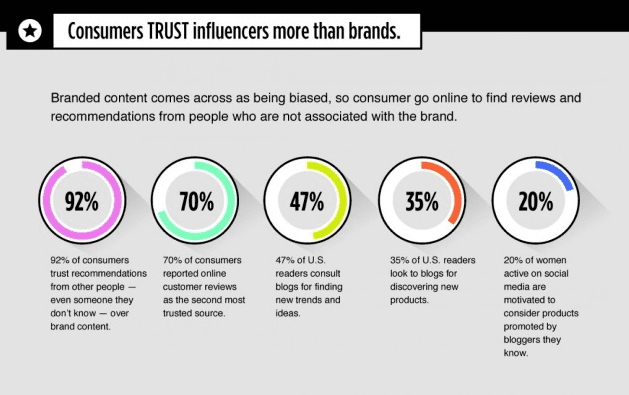
By understanding what matters most to your influencers, you’re one step closer to connecting with the people your customers trust the most. Thereby connecting your future customers with your brand.

Building Influencer Relationships Starts with Human Interaction

What holds true in the offline world holds true in the online world too. Relationships start to take hold primarily by listening and talking to each other. Before you can engage with influencers, it’s critical to have a good sense of their needs. Yes, you know how often they’re talking about your topic, but what does that tell you about them as people? Because, ultimately, influencer engagement is about human interaction.

Best-in-class Marketers Listen to Prioritize Influencer Engagement

Best-in-class marketers begin their day by listening. Follow in suit, that way you can monitor activity, listen and participate in relevant conversations around your topic, and prioritize your engagement. The key to building lasting relationships with influencers lies in conversations. Make sure to listen regularly to gain golden nuggets of information, which will help you uncover optimal opportunities to engage with them.

Consider These Five Actionable Tips to Help you Listen to and Participate in Relevant Conversations:

  1. Become familiar with the content that your influencers create and share online, e.g. blogs, twitter feed, LinkedIn posts, and YouTube videos
  2. Get equally familiar with their business sites and offerings (if the two are separate)
  3. Comment regularly on their blogs and social media posts
  4. Participate in non-work related conversations they are having, if you can do so without coming off like a stalker
  5. If you have shared personal interests, then don’t be shy about initiating those conversations or even meeting in person

Build relationships Now - Not When you Need Them for Marketing Campaigns

The hardest thing for marketers to do is aside their tactical goals when engaging with influencers. It is however the only path to success. Unless you genuinely work towards providing them with value  and expecting nothing in return, all your conversations will be loaded. Give, give, give, before you get. Start more conversations for conversation-sake. Support your influencers by sharing their content and amplifying their message first. Maybe initial conversations don’t directly benefit your marketing strategy, but they let the human on the other end know you’re interested in them.

And above all…

Don’t be in a hurry to ask your influencers to do ANYTHING. The road to influencer engagement is all about the journey, not the destination. If you follow these aforementioned steps, then your influencers will be more than willing to help you at a later stage.

influencer engagement

How Luxury Jewelry Brand De GRISOGONO Engaged with Influencers to Reach Millions

To further illustrate this point, take for example the luxury jewelry brand De GRISOGONO who leveraged influencers to engage with a new audience.

De GRISOGONO engages with key influencers all year round but events provide unique opportunities to create impact and to establish new relationships. Prior to the Cannes Film Festival 2015, the brand targeted a very small number of influencers from luxury, lifestyle, and fashion industries, and started building these relationships months before the event.

The team listened to conversations online to get to know these influencers and to offer valuable and mutually beneficial opportunities—from VIP access, photos, and interviews, to producing content featuring them to share with their own social channels.

The De GRISOGONO team uses Traackr to listen to conversations, identify the right influencers, and engage with their communities. Leveraging this insight, the team developed content plans around the events, tracked mentions and live engagement, and measured the impact of each activity. This enabled De GRISOGONO to do what no other brand had yet done in Cannes: Instead of trying to talk to millions of people, they focused on talking to a few influential individuals and indirectly reached millions.

How to Get Started with Influencer Engagement Today

  1. Identify the most relevant influencers for your business
  2. Learn as much about them as you can by listening and engaging in relevant conversations
  3. Engage in the conversation like a human being and remember that making meaningful connections will help your influencers become aware of your brand

People are far more likely to be receptive to what you are saying if they feel you’ve been listening to them. So listen, be empathetic, and respond thoughtfully and consistently.
Learn ways to elevate your influencer marketing practice like never before. For more actionable tips to build relationships and engage in meaningful conversations with key influencers to your brand, download The Marketer’s Guide to Mastering Influencer Engagement.

the marketers guide to mastering influencer engagement


from Blog – Smart Insights http://www.smartinsights.com/online-pr/influencer-marketing/master-influencer-engagement-strategy/

via Tumblr http://euro3plast-fr.tumblr.com/post/157652975739

Point of Sale: Retail & Travel Weekly

This week’s articles include perspectives on how not to slip up with chatbots, consumers openness to in-store monitoring, how Urban Outfitters saw significant lift from location targeting, and more.

The post Point of Sale: Retail & Travel Weekly appeared first on Digital Marketing Blog by Adobe.


from Digital Marketing Blog by Adobe https://blogs.adobe.com/digitalmarketing/news-and-resources/point-sale-retail-travel-weekly-36/

via Tumblr http://euro3plast-fr.tumblr.com/post/157649925549

How to take a more data-driven approach to digital marketing with DMPs

Crawl, walk, run: three steps to establishing an effective DMP

As digital marketers we’re all too aware of the importance of data. For example, the typical fortune 1000 company that sees a 10% increase in data accessibility generates $65 million in additional revenue, whilst bad or poor quality data costs organisations as much as 10-20% in revenue.

Although Big Data is no longer a new area of interest for marketers, the constant change in trends and focus mean that we must always stay up to date, if not one step ahead, of the trends to ensure we hold a competitive advantage. Just consider the sheer complexity of data-related terms:

I recently attended a data-driven marketing event run by the Omnicom Group which gave me the opportunity to look at some of the insights and trends from those working at the sharp-end of data marketing. The event was roughly grouped into three areas:

  1. Data and technology
  2. Programmatic
  3. Predictive analytics

One of the themes that stood out throughout the event was the importance of organising and exploiting data effectively and the need for a robust data management platform (or DMP). Establishing a DMP is not straightforward, however, there is a process any business can follow to ensure they set themselves up for success.

Not all data is created equal

As a starting point it’s worth summarising what data-driven marketing is and why it’s important:

Identity is key to understanding consumers and seeing changes in behaviour over time. However, we need to identify the most valuable data sets (which often sit in silos across organisations) and use analytics to extract the right insights.

3rd party data is useful but it doesn’t provide a competitive advantage, and whilst 2nd party data has many advantages it’s been held back by legal constraints. Therefore true competitive advantage lies with 1st party data:

The scale may be much lower but the quality cannot be beaten as this is data you own, collected from your own platforms. Nevertheless the overall goal should always be to find the right data sets that match your organisation’s objective.

Establishing a DMP

In order to gather and make sense of the huge amount of data being created, a DMP is becoming a prerequisite for nearly all types of business:

A DMP is essentially a data warehouse that harmonises data from multiple sources to build segments and can answer many different business questions:

Whilst there is no such thing as a ‘one-size-fits all’ approach, the creation of a DMP - from scoping to deployment - is a process that can be followed by any business, large and small. There are three key stages:

  1. Crawl
  2. Walk
  3. Run

I will outline the main details for each of these stages relating to operations, use cases and technology:

The crawl stage

At this early stage you should spend time defining your business objectives and how you’re planning to use a DMP. This planning process can be conducted as part of a small team as you uncover the opportunities and challenges.

  • Be clear up front on your definition of what a DMP is for your business and what is most important. Reporting, CRM and/ or media may all be priorities but remember that some DMPs are more advanced than others so there’s no need for a Ferrari when a Ford Mondeo will do!
  • Always budget for set-up, usage and training as well as the technology. Consider who will be using the tech internally and their current level of expertise
  • Think about how you’ll define audiences across your business and who you’ll want to target. Get a consistent definition of audiences upfront that everyone can buy into:

  • Site tagging forms the foundation for effective DMP deployment so conduct a tag audit early on that covers:
  • Load times - highlight the most critical/ important pages
  • Data quality - key for analytics integration. Are there tags on key pages? Do they fire correctly to capture the right data?
  • Data leakage - limit loss of 3rd party data. The average client website has tags from 75 different vendors with only 20% from the organisation (source: Ghostery)

The walk stage

Once you’ve identified how you’re planning to use a DMP, the process of engaging wider stakeholders from across the organisation will begin as you begin the vendor selection process.

  • Set up a group to manage stakeholders. Many of those involved will have different objectives and perspectives so a data/ tech council can be useful to agree priorities:

  • Start looking at key functionality:
  1. Audiences profiling - characteristics, hobbies and demographics of key customers. Is the audience buyers or browsers? Paid or organic visitors? How do they differ and how does this impact strategy
  2. Audience segmentation - smarter retargeting, e.g. if a visitor spends a certain time on page this leads to conversion
  3. Audience activation - set bid strategies based on different audiences; frequency capping
  • Don’t make audiences too granular because there is often data leakage and/ or cookie loss implications. Every time data is moved (e.g. from DMP to DSP) data loss occurs:

  • Decide what DMP is right for your business. Think about functionality, UI and support as well as cost. There will be different solutions for SMEs and enterprise organisations:

The run stage

Now that the DMP is in place and your organisation becomes more advanced from a data-management perspective, more technical questions around dynamic content, CRM integration and audience mapping.

  • A DMP allows you to move away from mass media to a more granular, audience-based targeting strategy. Dynamic and programmatic creative offers a unique opportunity but media and creative agencies need to work collaboratively to achieve success
  • Dynamic content requires a longer planning process and it’s worth taking time to work with your teams to develop audience decision trees:

  • At this stage a decision may also need to be made about bringing CRM data and segments into the DMP. CRM data is personal data whilst DMPs don’t store personally identifiable data (cookies and device IDs) and therefore CRM data must be converted. There are three ways to do this:
  1. Append DMP / DSP tracking into your CRM emails
  2. Match known individuals to cookies when a user identifies themselves on the client site (e.g. when they log in to the site)
  3. Work with a 3rd party on-boarding partner (e.g. Experian, LiveRamp, etc). N.B. working with an on-boarding partner can bring associated costs and match rates are typically quite low (c.20-35%)

Summary

Data is playing an increasingly important role in the planning process for marketers. The data and media world’s have collided providing us with new and exciting opportunities to learn more about our customers and deliver relevance on a larger scale:

As a result of a more data-driven approach to marketing, we’re likely to see more businesses opt to invest in DMPs to manage the data they’re acquiring. However, as with any technology, a DMP is not a silver bullet. Careful planning, consideration and deployment is needed to ensure the right processes are put in place to establish the right culture and mindset so that the entire organisation can benefit from true data-driven decision-making.


from Blog – Smart Insights http://www.smartinsights.com/digital-marketing-platforms/big-data-digital-marketing-platforms/take-data-driven-approach-digital-marketing/

via Tumblr http://euro3plast-fr.tumblr.com/post/157647706134

The Global Brand Experience: Upgrade Your Customers to First Class

The post The Global Brand Experience: Upgrade Your Customers to First Class appeared first on Digital Marketing Blog by Adobe.


from Digital Marketing Blog by Adobe https://blogs.adobe.com/digitalmarketing/digital-marketing/global-brand-experience-upgrade-customers-first-class/

via Tumblr http://euro3plast-fr.tumblr.com/post/157646222319

How to become a better influencer within your niche

Practical ideas and tools to improve influencer marketing

Ever wondered why Dr. Phil bears an influence over its audience? The simple answer is because he was able to impose his knowledge and expertise in psychology through an effective medium. There may be better doctors than Dr. Phil. However, the fact that he was featured on Oprah, whose show reaches out to millions of viewers on a regular basis, gives him an edge over other practitioners. As more people hear his advice to his patients and the fact that Oprah vouches for his expertise quickly made him an influential psychologist.

Influencer marketing

The anatomy of influence

There are lots of things marketers can learn from Dr. Phil as an example of influencer marketing. Being knowledgeable about a particular subject does not automatically make you an online thought leader. Moreover, writing comprehensive and high-quality posts about your topic is not what makes an influencer.

The secret to influencer marketing is the ability to find an effective platform with the most viewership so you can share your knowledge and content. Doing this lets you amplify your content reach so more people will be able to read your content. If your content is as good as advertised, you can expect more people to engage with you, if not become more familiar with your work. Therefore, if you want to build influence online, then you need to form a campaign using different tactics to achieve it.

For this post, we will break down the campaign into three components:

  • Guest blogging
  • Blogger outreach
  • Social syndication

Below are examples of strategy you can apply in building your influence.

Guest blogging

Blogging on different sites is an excellent way to tap into a brand new readership that you can convert as readers of your blog, if not advocates of your
services.

“Guest posting has been around for a while, and it is still an awesome way to get more traffic and visibility to your blog” says Mike Wallagher in this post. He also shows proof on how he still receives referral traffic from his guest posts.

The principle behind the effectiveness of guest blogging is pitching a post idea to the blog owner you are targeting to publishing your post on. With that in mind, you need to pitch to the site with the most online influence.

You can gauge them by measuring these metrics:

  • Domain Authority
    Using this measurement developed by Moz gives you insight on the value of a website based on the quality and quantity of links pointing to it. The
    higher the score, the more valuable the links are, the more cause for you to reach out to the site owner for a guest post opportunity.
  • Social Proof
    Having lots of social media followers and likes proves that the site has a vibrant community that you can tap into once your guest post is published.
  • Subscribers
    Some blogs show the number of subscribers they have on their mailing list. The more subscribers, the more engaged and engrossed the readers are with
    the newsletters and content they are receiving from the site owner. There is also a chance that the site syndicates guest posts in their email
    campaigns, which puts you and your guest post at an advantage.
  • Blog Comments
    Blog engagement can be measured by the number of comments each post has. More comments that provide value to the discussions means more chances for
    your to engage and meet like-minded people.

Considering all these factors, you can come up with a list of sites to reach out to. The higher the score of each metric, the more reason for you to publish your guest post there. This way, you can enjoy more readers of your post and more chances to convert them as readers and advocates of your cause.

Blogger outreach

The best way to drive more visitors to your content is to get an influencer on board with  your post. Look no further than the ones you linked out to in your post. Linking out to resource pages is a good way to refer your readers to more specific content about a particular idea you mentioned in your page post. This practice is also a way of saying to readers, “This page I am linking to, the blogger who published this page, is awesome!”

As they say in SEO, a backlink is akin to a recommendation. By linking back to different sites, you are recommending those sites to your readers. Therefore, if you linked out to resources pages to point readers to more information about an idea you presented in the content, reach out to the resource page owner with your content. Tell them that you linked to their pages because they provide great value and insight to readers of your post.

You can choose to say to them to share your posts or not. The approach will be up to you on how you want to reach out to the blogger or site owners.The example above is just one way on how you can approach blogger outreach. This post at SERPs.com shows different templates that you can use for blogger outreach. The purpose of doing this is to piggyback on the bloggerĂ­s popularity based on the metrics also found in the guest blogging tactic above.

By using blogger outreach in the right way you can leverage that influence to grow your blog faster than you imagined’ says Adam Connell in this post at Blogging Wizard.

The more popular the blogger is, the more influence s/he has in your niche. Consider this factor, if the blogger shares or links back to your post,
consider this a big win for you!

Social syndication

Creating a social syndication system where you can automatically syndicate and share your post on social media is a great way to extend the reach of your content. One way of doing this is to join one of the many  online influencer marketing platforms.

Triberr Is an example of one of these platforms. However, you will need to join Tribes related to your niche and become a Member on each. The idea here is to join Tribes with lots of members to increase the chances of your content to be shared by people. This way, you cut down the time searching for people to share your posts with you, as the Tribe members will do the heavy lifting for you.

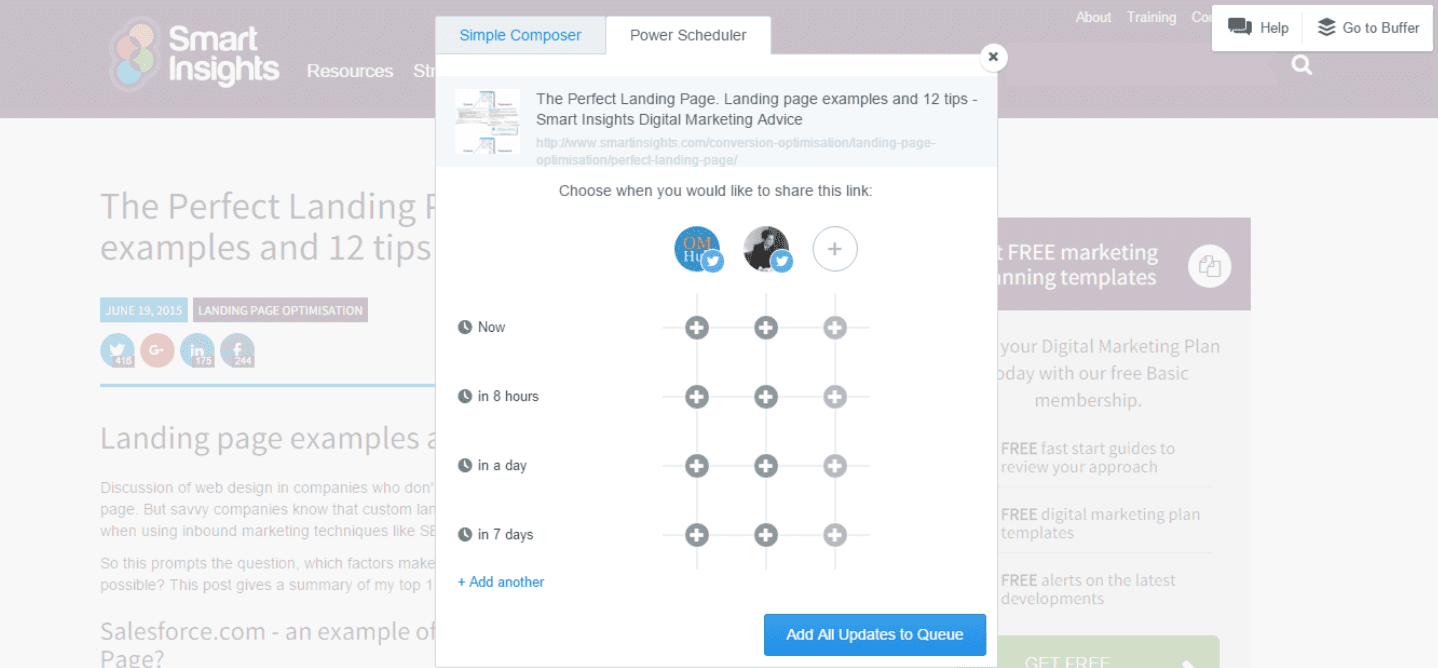
Another tool you ought to consider using is Buffer. Among the different social media management tools out there, Buffer is arguably the most lightweight, as it focuses on helping you automate your social sharing in just a few clicks. The tool’s Power Scheduler feature is arguably its ace in the hole. Enter as many social media accounts you own and queue your posts to be shared on these sites within a period.

Buffer tool

The tool will take care of the time when the posts will be published. This reduces the time of figuring out the best times when you should publish your
content.

Wrapping it up

By following the tips above, you increase the chances of your content to be found by your audience. As a result, you can get more people on board with your deas and exert yourself as a thought leader.

By captivating your audience and performing these tactics on the consistent basis, you can finally become an influencer.


from Blog – Smart Insights http://www.smartinsights.com/online-pr/influencer-marketing/how-to-become-an-influencer-within-your-niche/

via Tumblr http://euro3plast-fr.tumblr.com/post/157645635499

Thursday, 23 February 2017

Google AMP: One Year Later

The numbers are in, and consumers have given Google’s Accelerated Mobile Pages (AMP) initiative a thumbs-up. At Mobile World Congress in Barcelona, Adobe Digital Insights will be releasing a new report that analyzes over 1.7 trillion visits to over 16,000 mobile websites (between Jan. 2014 and Jan. 2017). This data, aggregated and anonymous, comes through Adobe Analytics within Adobe Marketing Cloud.

As part of this report, we have new data showing that as of December 2016, top publishers within the United States now see 7% of all their traffic – across devices – coming through Google AMP.

Also as of December 2016, AMP has grown 405% from when usage began picking up in April 2016. And in November during a busy election season when coverage ramped up considerably across the board, AMP traffic spiked at 896%.

What we’re seeing is that on the one-year anniversary of Google’s efforts to speed up the mobile Web, many consumers have welcomed this technology as a fast and efficient way to access content on their mobile devices.

To AMP or not to AMP
In a world where consumers are increasingly fragmented across devices and platforms, media companies have lots to consider when deciding how to best get their content in front of audiences. There’s no one-size-fits-all and every channel has its drawbacks and opportunities.

Google has a vested interest in the Web given their core business, and their investment in AMP makes a lot of sense. But at an industry level, this technology truly does enhance how consumers access content on mobile devices; Facebook has a similar deployment with Instant Articles. Anybody who has tried Google AMP can attest to how smooth the experience is. And for a media company, this is what audiences are craving.

Within Adobe Marketing Cloud, we have the pleasure of working with some of the largest media companies in the U.S. When AMP was first made available, we announced our support and have worked with customers to successfully implement the technology.

What we’ve found is that beyond the technical hurdles – such as implementing the proper tracking before deployment – there’s a small cultural shift that has to happen as well. Developers must sit down at the table with designers to determine the best approach that satisfies both parties. At the same time, AMP is also a forcing function for brands to think not only mobile-first, but mobile-only.

AMP now represents 7% of traffic for top publishers and this will likely increase, especially as smartphones become the dominant way for consumers to interact with the world around them. Digital transformation is upending the media industry in so many ways, and brands will have to keep a close eye on developments like AMP to make sure the experience they deliver is stellar.

AMP is a technology to watch in the coming years and it is setting itself up to disrupt not only the mobile web for the media industry, but also the mobile web as a whole. If your company is ready to make the jump to AMP, make sure that measurement is front and center because success that can’t be measured is no success at all.

For details on how to setup AMP pages and how to track them, just check out our documentation. Happy AMPing!

The post Google AMP: One Year Later appeared first on Digital Marketing Blog by Adobe.


from Digital Marketing Blog by Adobe https://blogs.adobe.com/digitalmarketing/analytics/google-amp-one-year-later/

via Tumblr http://euro3plast-fr.tumblr.com/post/157640835479